
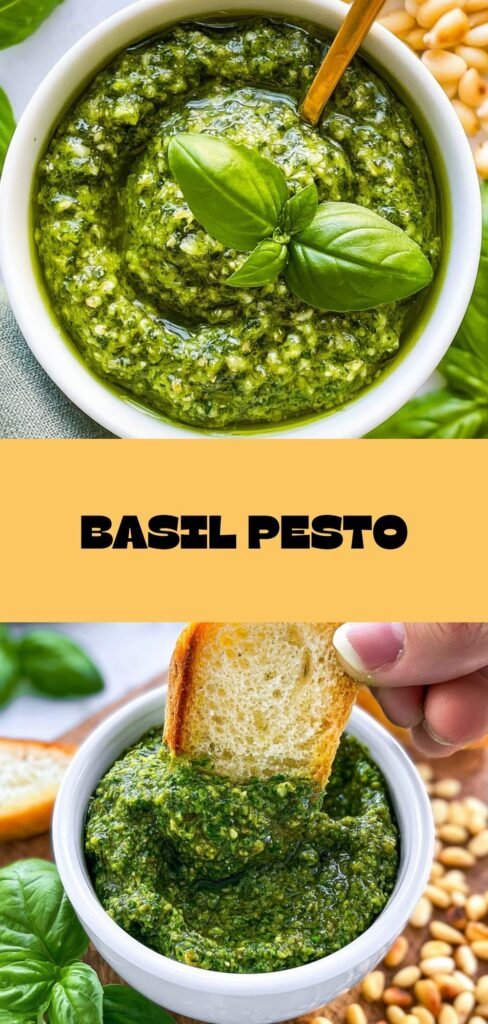
Basil pesto is a fragrant, vibrant sauce that brings a fresh herb taste and smooth texture to your dishes. The aroma of garlic and toasted pine nuts fills the kitchen as you prepare this delightful recipe.

You don't need to be a chef to make basil pesto; it’s straightforward and adaptable. With just a few quality ingredients, you'll create something deliciously satisfying in no time.
The “Why” Behind This Recipe
This recipe for Basil Pesto works beautifully because it balances fresh ingredients and simple techniques. The toasted pine nuts add depth, while the high-quality olive oil brings everything together into a smooth and vibrant sauce. By blending at the right pace, you can achieve your preferred texture, whether chunky or silky.
Now that we've covered the essentials of making Basil Pesto, let’s explore some delicious ways to serve it!
Quick Win (Do This First)
- To elevate the flavor of your Basil Pesto, be sure to toast the pine nuts in a dry skillet before blending.
- This simple step enhances their nuttiness and adds depth to your pesto.
With this quick tip in mind, let's explore the detailed recipe for making fresh Basil Pesto.
Essential Ingredients
To create a vibrant and flavorful Basil Pesto, gather the following essential ingredients:
- Fresh basil leaves: Use 2 cups packed for a fragrant and aromatic pesto; the fresher, the better.
- Pine nuts: ½ cup toasted enhances the nutty flavor; toast them lightly in a skillet before using.
- Garlic: 2 cloves peeled add depth; choose fresh garlic for optimal taste.
- Parmesan cheese: ½ cup grated brings richness and savory notes; opt for high-quality cheese for best results.
- Extra virgin olive oil: ½ cup, preferably high quality, ensures a smooth texture and enhances flavor.
- Salt: ¼ teaspoon to season; adjust according to your taste preference for the perfect balance.
- Black pepper: ¼ teaspoon freshly ground adds a subtle kick; feel free to add more if desired.
The full ingredients list, including measurements, is provided in the recipe card directly below.
Step-by-Step (No Stress)
Start by gathering all your ingredients. Measure out 2 cups of fresh basil leaves, ½ cup of toasted pine nuts, and 2 cloves of peeled garlic. This careful preparation sets the foundation for a delicious Basil Pesto.
Next, toast the pine nuts in a dry skillet over medium heat. Stir them frequently for about 3-5 minutes until they turn golden brown and fragrant. The toasting enhances their flavor, making your pesto even more enjoyable.
In a food processor, combine the fresh basil leaves, toasted pine nuts, and garlic cloves. Pulse the mixture until it becomes coarsely chopped, allowing the bright aroma of basil to fill your kitchen. Remember to scrape down the sides with a spatula for even mixing.
Add in the grated Parmesan cheese, salt, and freshly ground black pepper. Pulse again until these ingredients are well combined and you see a lovely green mixture coming together.
With the food processor running, slowly drizzle in the high-quality extra virgin olive oil. This step emulsifies the oil into your pesto, creating a smooth texture. Stop occasionally to scrape down the sides as needed until you reach your desired consistency.
Finally, taste your pesto and adjust any seasonings if necessary. You may prefer to add more salt or pepper to enhance its flavor before transferring it to a clean jar or bowl for storage.
Now that you've crafted this vibrant Basil Pesto, let's explore some delicious ways to enjoy it!
If It Looks Wrong, Here’s the Fix
- If your basil pesto appears too thick, simply drizzle in a bit more extra virgin olive oil while blending until you achieve the desired consistency.
- Should you find the flavor lacking, try adding a pinch more salt or freshly ground black pepper to elevate the taste.
- Remember, this is a personal recipe, so feel free to adjust it to your liking!
Now that you have the perfect recipe for Basil Pesto, let’s explore some delicious ways to serve it.
Budget & Time Tips
To save time when making Basil Pesto, consider toasting a larger batch of pine nuts at once and storing the extras for future recipes. You can also use leftover pesto as a dressing for salads or a spread on sandwiches, maximizing its use. Lastly, prep your ingredients in the order listed to streamline the process and minimize cleanup. This approach will have you enjoying your homemade pesto with ease. Now that you're ready to whip up some delicious Basil Pesto, let’s explore some creative serving suggestions.
Make-Ahead, Storage & Reheat
Basil Pesto can be made ahead of time and stored in the refrigerator for up to one week. To prevent browning, cover it with a thin layer of olive oil. For longer storage, freeze the pesto for up to three months. When ready to use, simply thaw in the refrigerator and stir gently before serving to maintain its texture and flavor. This preparation makes it easy to enjoy Basil Pesto whenever you like. Now, let's explore some delicious ways to incorporate this vibrant sauce into your meals.
FAQ
How long does it take to make basil pesto?
It takes about 10 minutes to prepare basil pesto from start to finish.
Can I substitute pine nuts in the recipe?
Yes, you can use walnuts or almonds as substitutes for pine nuts, though flavors may vary.
What texture should my basil pesto be?
Aim for a smooth consistency, but you can blend less for a chunkier pesto if preferred.
How should I store leftover basil pesto?
Store pesto in the refrigerator for up to one week or freeze it for up to three months.
Can I adjust the seasoning in the pesto?
Absolutely! Taste the pesto and adjust salt, pepper, or cheese to suit your preferences.
Now that you have your questions answered, let's explore some delicious ways to use your homemade basil pesto.
Basil Pesto
Ingredients
Method
- Gather all ingredients and measure them accurately. This ensures a balanced flavor in the pesto.
- Toast the pine nuts in a dry skillet over medium heat for about 3-5 minutes, stirring frequently, until they are golden brown. This enhances their flavor.
- In a food processor, combine the fresh basil leaves, toasted pine nuts, and peeled garlic cloves. Pulse until the mixture is coarsely chopped.
- Scrape down the sides of the bowl with a spatula to ensure even mixing.
- Add the grated Parmesan cheese, salt, and black pepper. Pulse again until well combined.
- With the food processor running, slowly drizzle in the extra virgin olive oil. This emulsifies the oil into the mixture, creating a smooth pesto. Stop to scrape down the sides as needed.
- Continue blending until the pesto reaches your desired consistency. For a chunkier pesto, blend less.
- Taste the pesto and adjust seasoning if necessary. You may want to add more salt, pepper, or even more cheese for a richer flavor.
- Transfer the pesto to a clean jar or bowl. If not using immediately, cover with a thin layer of olive oil to prevent browning.
- Pesto can be stored in the refrigerator for up to one week or frozen for up to three months.



Leave a Reply